Best Place for Exchange in Istanbul: Where to Change Money
Short answer: the best place to exchange money in Istanbul is a licensed döviz (exchange) office in a busy central district — the Grand Bazaar and Nuruosmaniye, Eminönü and Sirkeci, Taksim and İstiklal, or Kadıköy on the Asian side. These offices compete street by street, charge no commission and post their rates on a board outside.
Avoid exchanging large amounts at the airport, in hotel lobbies or in shopping malls, where the spread is widest. Change just enough at the airport to reach the city, then exchange the rest downtown.
Changing money in Istanbul looks confusing on your first morning: exchange boards on every corner, two numbers on each line, and a different rate every hundred metres. It is far simpler than it seems. Istanbul is one of the most competitive currency markets in Europe, and once you know how to read a board and which districts to use, you can change money in five minutes and get within a whisker of the market rate.
How Currency Exchange Works in Istanbul
Turkey has a dense network of licensed exchange offices, known locally as döviz bürosu, operating alongside banks. They are authorised and supervised institutions, they display their rates publicly, and in practice they do not add a separate commission — their margin is built into the rate itself. That transparency is exactly why the city-centre offices are so competitive: you can compare three of them on the same street in under a minute.
ALIŞ and SATIŞ: How to Read the Board
Every exchange board has two columns, and mixing them up is the classic first-day mistake:
- ALIŞ – the office buys. This is the rate you get when you hand over your euros, dollars or pounds. Higher is better for you.
- SATIŞ – the office sells. This is the rate you pay when you buy foreign currency with Turkish lira.
The gap between the two columns is the spread, and it is the single best indicator of value. A tight spread means a competitive office; a wide one means you are paying for the location.
Why You Never Get the Rate You See Online
The rate quoted on financial websites is the interbank rate for electronic transfers between institutions — nobody hands over banknotes at that number. Physical cash has to be counted, stored, insured and moved, and that cost sits in the spread. You can check the official indicative rates published by the Central Bank of the Republic of Türkiye before you go out, then treat it as a benchmark rather than a promise. As a rule, the larger the sum you change, the closer you get to that benchmark.
The Best Places to Exchange Money in Istanbul
1. The Grand Bazaar and Nuruosmaniye
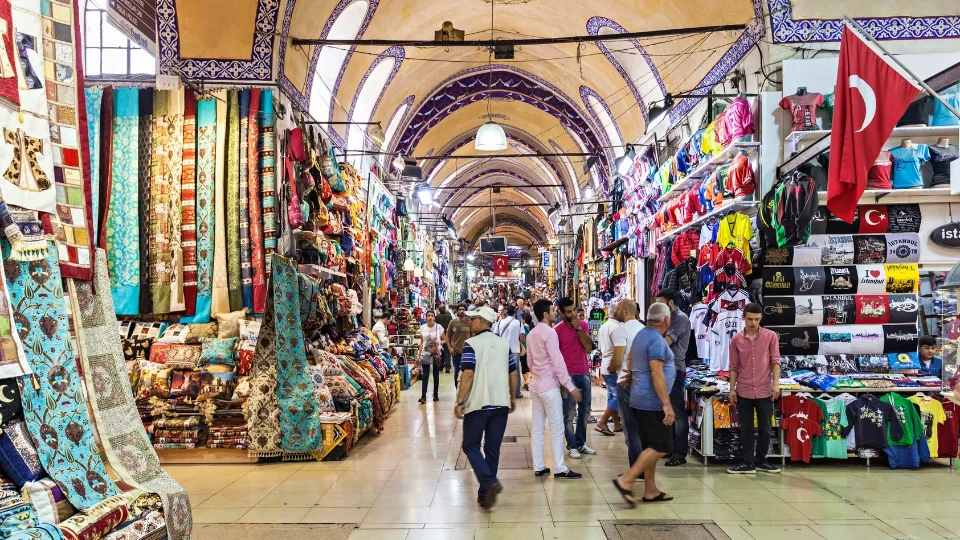
The streets in and around the Grand Bazaar have historically been the heart of Istanbul's cash trade, and competition there is fierce. Rates inside the bazaar and on the surrounding Nuruosmaniye and Çemberlitaş streets are consistently among the best in the city. Bring your cash in good condition — torn, taped or heavily marked notes are often refused or discounted.
2. Eminönü, Sirkeci and the Spice Bazaar
A few minutes downhill, the Eminönü and Sirkeci waterfront is another dense cluster of exchange offices, convenient if you are already there for the ferries, the Spice Bazaar or a Bosphorus cruise. Rates track the Grand Bazaar closely.
3. Taksim, İstiklal Street and Beyoğlu
If you are staying in Beyoğlu, you do not need to cross the Golden Horn. There are reliable offices on and just off İstiklal Street and around Taksim Square. Rates are marginally behind the Grand Bazaar on average, but the difference is small on a typical holiday budget.
4. Kadıköy, Laleli and Other Local Hubs
Kadıköy on the Asian side, Laleli, Fatih and Şişli all have well-established offices serving residents rather than tourists, which keeps them honest. If your hotel is on the Asian side, Kadıköy's market streets are the obvious choice.
5. Sultanahmet
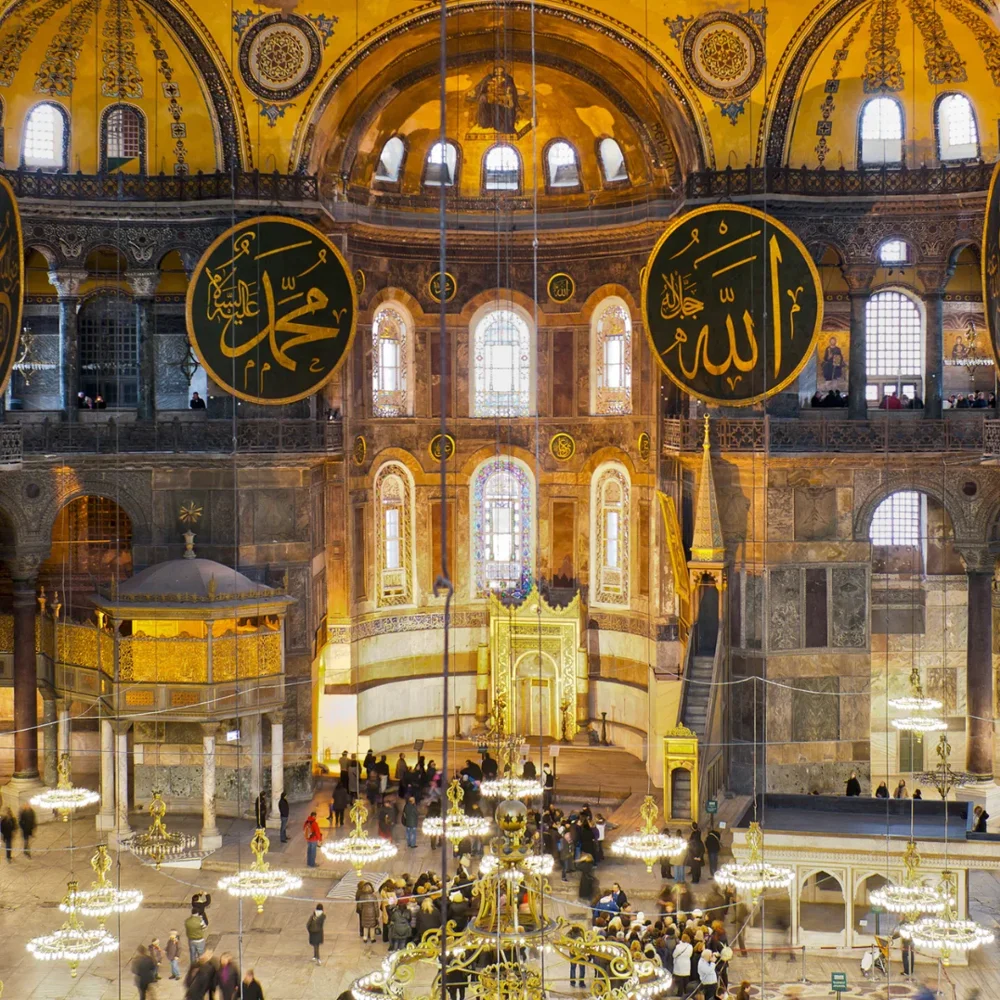
Offices in Sultanahmet are the most convenient if you are sightseeing around Hagia Sophia and the Blue Mosque, and they are perfectly safe. Because the area is almost entirely visitor-facing, though, rates are usually a step behind those a ten-minute walk away in the bazaar quarter.
6. Banks
Turkish banks will exchange major currencies at rates broadly comparable to the exchange offices. They are a fine option if you prefer a formal counter and a printed receipt, but they close in the late afternoon on weekdays and shut at weekends, and queues can be long.
7. Hotels, Malls and Airport Counters: Convenience You Pay For
These three are the expensive end of the market. Hotel front desks and shopping-mall kiosks serve captive customers, and airport counters carry high operating costs and very little competition. Use them only for small, immediate needs.
Istanbul Exchange Options Compared
| Where | Typical rate | Hours | Best for |
|---|---|---|---|
| Döviz offices, Grand Bazaar / Nuruosmaniye | Best in the city | Roughly 09:00–19:00, closed Sunday | Changing the bulk of your cash |
| Döviz offices, Eminönü / Sirkeci | Very good | Daytime, most Saturdays | Ferry and Spice Bazaar days |
| Döviz offices, Taksim / İstiklal / Kadıköy | Good | Long daytime hours, often Sunday | Convenience near your hotel |
| Banks | Fair | Weekday business hours only | Formal receipts, larger sums |
| Hotel reception | Poor | 24/7 | Emergencies only |
| Airport counters | Worst | 24/7 | Taxi or train fare into the city |
Arriving at Istanbul Airport (IST) or Sabiha Gökçen (SAW)
Both airports have exchange counters and ATMs in the arrivals hall, open around the clock. The sensible arrival playbook is the same at either one:
- Change a small amount — enough for a taxi, the M11 metro or the Havaist/Havabus coach, plus a coffee.
- Buy an İstanbulkart from a machine in the terminal and load it; it is cheaper than single tickets on every metro, tram, bus and ferry.
- Change the rest the next morning at a city-centre office.
Worth knowing: if you are only changing the equivalent of a taxi fare, the airport's poorer rate costs you very little in absolute terms. The mistake is changing your entire holiday budget at the counter before you have even left the terminal.
Using ATMs in Istanbul
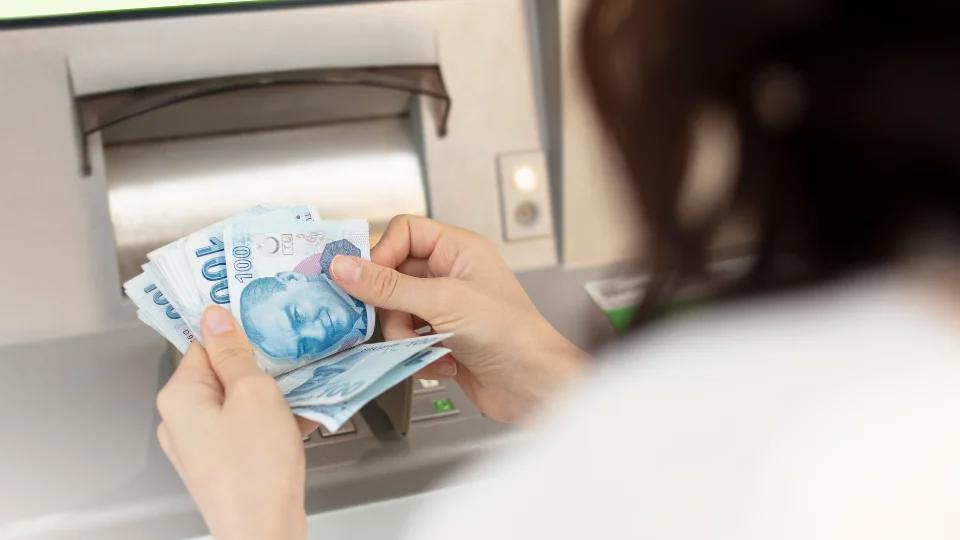
ATMs are everywhere in the city centre and are a perfectly good alternative to cash exchange — provided you avoid two traps.
Always Choose Turkish Lira
When the machine offers to bill you in your home currency, or shows a "guaranteed rate" and asks you to accept a conversion, decline it and choose Turkish lira. That offer is dynamic currency conversion, and the built-in markup is typically far worse than your own bank's exchange rate. The same applies to card terminals in shops and restaurants: always pay in lira.
Watch for Two Sets of Fees
A withdrawal in Turkey can attract a charge from the local ATM operator and another from your own bank at home. Fees vary considerably between Turkish banks, and machines are required to display the local charge on screen before you confirm — read that screen and cancel if it looks steep. State-owned banks are often the cheaper option for foreign cards. Withdrawing one larger amount rather than several small ones keeps flat per-transaction fees down.
Practical ATM Safety
Use machines attached to a bank branch or inside its lobby rather than standalone units in tourist alleys, shield your PIN, and never accept help from a stranger at the keypad. Outside Istanbul, or in smaller towns on a wider Turkey itinerary, check ATM locations on Google Maps before you set out.
Cash or Card in Istanbul?
Visa and Mastercard are accepted almost everywhere in Istanbul — restaurants, supermarkets, chain cafes, museums and most taxis; American Express is accepted more selectively. Contactless works on public transport too.
You still want cash. Street vendors, small family lokantas, bazaar stalls, public toilets, hamams and tips are all easier in lira, and some small businesses quietly prefer cash because of card commissions. A daily float of a few hundred lira covers most travellers comfortably.
One firm rule: do not pay for goods in euros or dollars. Shops that accept foreign notes apply their own conversion, and it is never in your favour. Change money properly and pay in lira.
Eight Rules for a Safe, Fair Exchange
- Use a licensed office with a printed rate board on public display.
- Compare two or three boards on the same street — but do not spend an hour of your holiday chasing a rounding difference.
- Confirm the rate and the total you will receive before handing over your money.
- Ask whether any fee applies. Reputable central offices will say no.
- Count your lira at the counter, before you step away.
- Keep your receipt, especially for larger sums.
- Bring clean, undamaged banknotes; new-series notes get the best treatment.
- Never change money with someone who approaches you in the street.
Common Mistakes to Avoid
- Changing everything at the airport. The single most expensive habit.
- Reading SATIŞ as your rate. When you sell currency, ALIŞ is your number.
- Accepting "pay in your own currency" at an ATM or card terminal. Always lira.
- Expecting the online rate. That is the electronic rate, not a cash rate.
- Carrying damaged notes. They will be refused or discounted.
- Walking around with your whole budget in cash. Change what you need for two or three days at a time and use the hotel safe.
Frequently Asked Questions
Where is the best place to exchange money in Istanbul?
Licensed döviz offices in the Grand Bazaar and Nuruosmaniye area generally offer the best rates, followed closely by Eminönü, Sirkeci, Taksim, İstiklal and Kadıköy.
Should I exchange money at Istanbul Airport?
Only a small amount, enough to reach your hotel. Airport counters have the widest spreads in the city.
Do exchange offices in Istanbul charge commission?
Central offices normally do not charge a separate commission; their margin is in the rate. Always confirm before you hand over cash.
Do I need my passport to change money in Istanbul?
Not for ordinary tourist amounts. Larger transactions can require identification, so carry your passport or a copy if you plan to change a significant sum.
What do ALIŞ and SATIŞ mean?
ALIŞ is the rate at which the office buys your foreign currency — the rate that matters when you are changing money. SATIŞ is the rate at which it sells foreign currency to you.
Is it better to use an ATM or an exchange office in Istanbul?
Both work well. A city-centre exchange office usually wins if you are carrying cash; an ATM can be competitive if your bank has low foreign-transaction fees. In both cases, transact in Turkish lira.
Which currencies are easiest to exchange?
Euros, US dollars and British pounds are accepted everywhere and get the tightest spreads. Other currencies are exchangeable in central offices but at less favourable rates.
Can I pay in euros or dollars in Istanbul?
Some tourist-facing businesses will accept them, but at a poor built-in rate. Paying in Turkish lira is always cheaper.
Plan the Rest of Your Istanbul Trip
Once your money is sorted, the city is yours. Our local guides run private tours across the Old City, the Bosphorus, the Grand Bazaar and beyond — and a guide who knows which stalls are worth your lira is the best exchange rate of all.