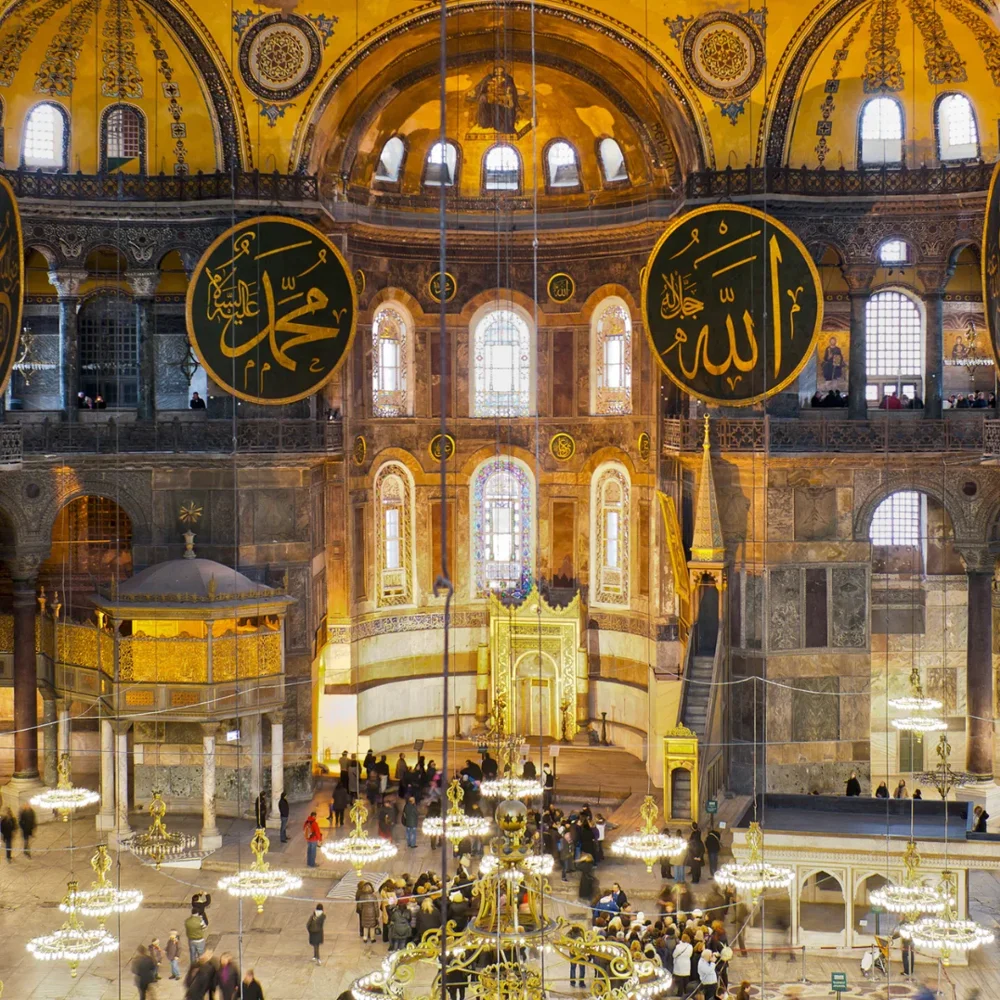

Hagia Sophia vs Pantheon: Architecture & History
Hagia Sophia in Istanbul and the Pantheon in Rome are two of the world’s most influential domed monuments. Although they were built in different cities, centuries apart, their architectural ambition, religious transformations, and cultural legacy reveal a fascinating connection for travelers who love history, sacred spaces, and landmark engineering. If you plan to visit Turkey, understanding this relationship will make your Hagia Sophia visit far more meaningful.
📌 Quick Guide: How Hagia Sophia Relates to the Pantheon
- Main connection: Both monuments are masterpieces of dome engineering that shaped later religious architecture.
- Key difference: The Pantheon has a Roman concrete hemispherical dome, while Hagia Sophia uses a Byzantine pendentive dome above a basilica plan.
- Religious history: Both buildings changed religious identity over time and remain active sacred spaces today.
- Best travel insight: Visit with context, because their real power lies in how architecture, empire, and faith overlap.
A Tale of Two Cities: Rome and Constantinople
The Pantheon stands in the historic heart of Rome and is one of the best-preserved monuments of the ancient Roman world. The building we see today is generally associated with Emperor Hadrian and dates to around 126 AD. Its vast unreinforced concrete dome remains one of the most celebrated achievements in Roman engineering.
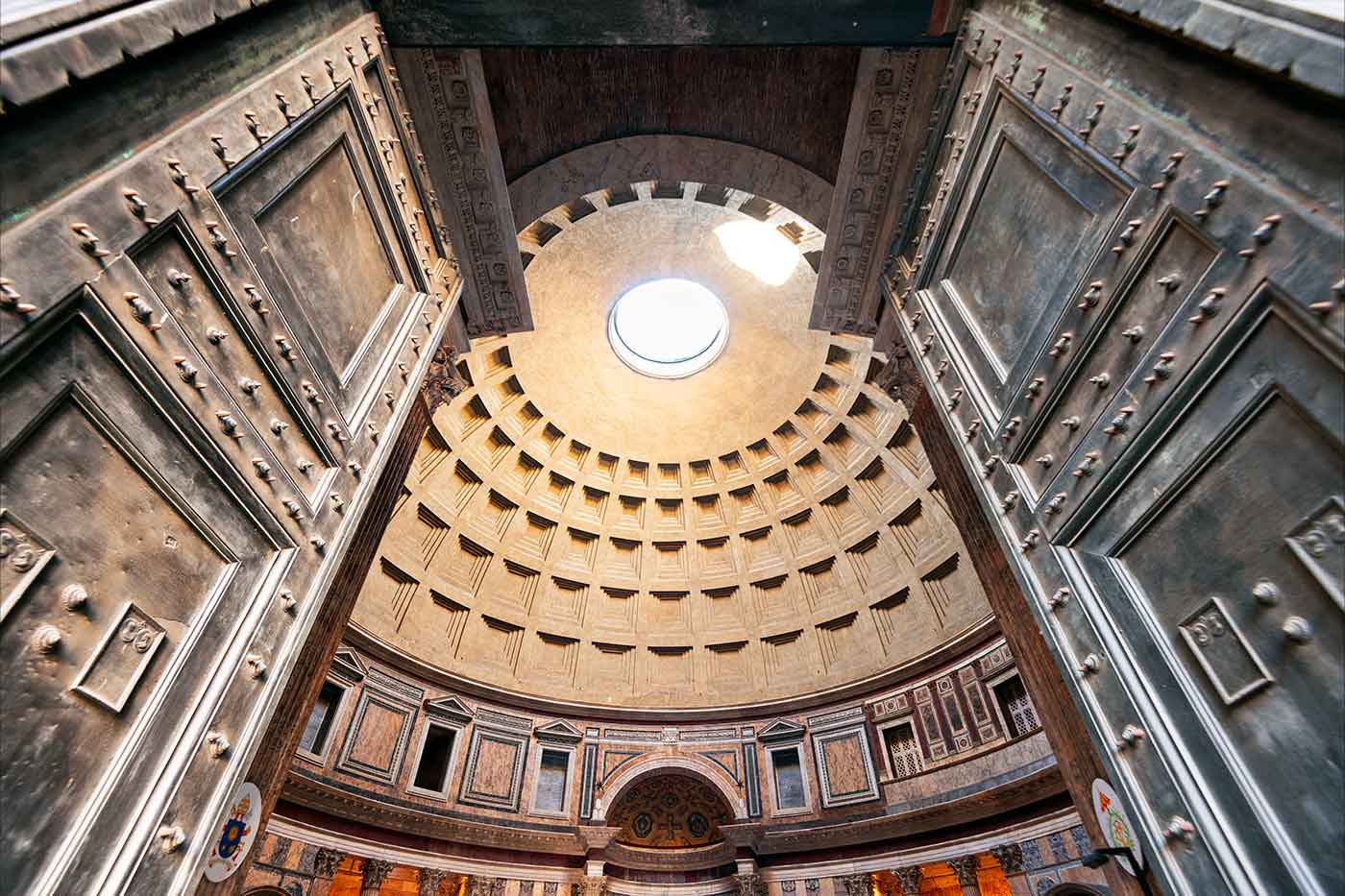
The name “Pantheon” comes from Greek and is commonly interpreted as “all gods,” reflecting the building’s original association with the divine world of ancient Rome. Its interior was designed to create a powerful cosmic effect: a perfect circular space crowned by a dome and illuminated by a single opening, the oculus.
Hagia Sophia was completed in 537 AD in Constantinople, today’s Istanbul, under the Byzantine emperor Justinian I. Unlike the Pantheon, it was built as a Christian cathedral and became the largest cathedral in the world for nearly a thousand years. Its Greek name, Hagia Sophia, means “Holy Wisdom.”
For travelers exploring Hagia Sophia in Istanbul, this comparison helps explain why the monument feels both Roman and Byzantine, both imperial and spiritual. It inherited the ambition of ancient dome construction and transformed it into a new architectural language.
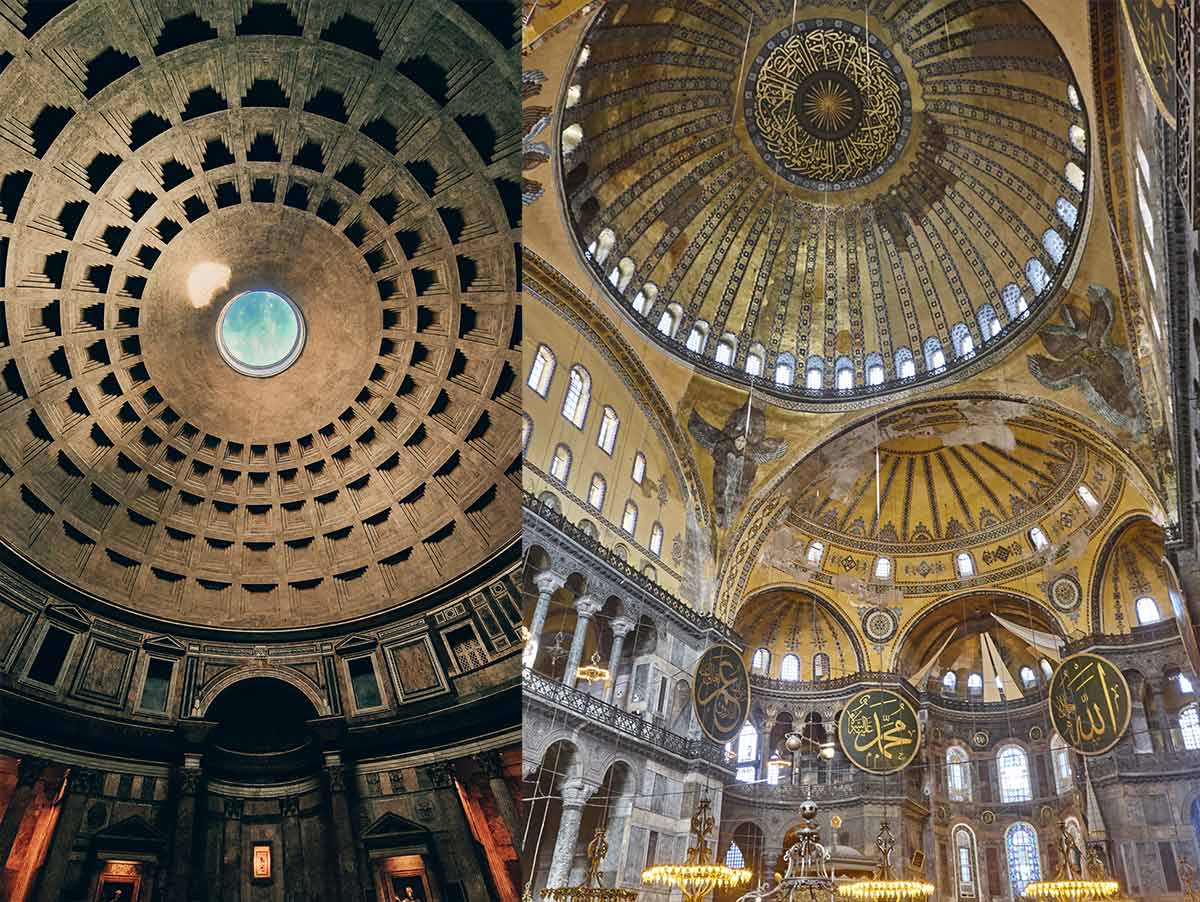
Architectural Miracles: How the Domes Compare
The clearest relationship between Hagia Sophia and the Pantheon is architectural. Both buildings use the dome not simply as a roof, but as a symbol of heaven, power, and sacred space. Yet they achieve this effect in very different ways.
The Pantheon Dome
The Pantheon’s dome is a near-perfect hemisphere made of Roman concrete. At the top is the oculus, a circular opening that allows sunlight, rain, and air into the building. This single beam of natural light moves across the interior during the day, giving the space a dramatic and almost celestial atmosphere.
Its engineering was revolutionary because the Romans carefully reduced the weight of the dome as it rose. The result is a structure that still feels impossibly bold almost two thousand years later.
The Hagia Sophia Dome
Hagia Sophia’s dome is different. It appears to float above the central space, supported by pendentives that transfer the weight of the circular dome onto a square base. This solution allowed Byzantine architects to combine a long basilica plan with a vast central dome.
The design had an enormous influence on later sacred architecture, especially Ottoman mosque design. In Istanbul, the Blue Mosque and many other imperial mosques continued the conversation that Hagia Sophia began.

What Makes Their Architecture Connected?
The Pantheon and Hagia Sophia are connected by a shared ambition: both try to make architecture feel larger than human scale. The Pantheon creates a complete, balanced, self-contained universe. Hagia Sophia creates movement, light, and vertical drama, making the dome appear suspended above the worshipper.
In simple terms, the Pantheon perfected the Roman dome, while Hagia Sophia reinvented the dome for a new Christian imperial capital. Later, Ottoman architects studied Hagia Sophia closely and adapted its ideas for mosque architecture across Istanbul.
Culture, Religion, and Transformation
Both monuments have survived because they adapted. The Pantheon was converted into a Christian church in the early 7th century, which helped preserve it through the Middle Ages. Today it is known as the Basilica of Santa Maria ad Martyres and continues to function as a place of worship.
Hagia Sophia has experienced even more visible transformations. It began as a Byzantine cathedral, became a mosque after the Ottoman conquest of Constantinople in 1453, was converted into a museum in 1935, and was reconverted into a mosque in 2020.
These changes do not weaken its identity; they make Hagia Sophia one of the clearest symbols of Istanbul’s layered history. Byzantine mosaics, Ottoman calligraphy, marble columns, imperial galleries, and Islamic prayer traditions all exist within the same extraordinary monument.

Visiting Hagia Sophia and the Pantheon in 2026
Both monuments are active religious sites, so visiting them requires more than buying a ticket and taking photos. Dress respectfully, check current opening hours before you go, and allow enough time to absorb the interior details.
Tips for Visiting Hagia Sophia
For foreign visitors, Hagia Sophia’s tourist route is generally focused on the upper gallery, where you can see Byzantine mosaics, Ottoman architectural layers, and excellent views of the central nave. The ground floor functions primarily as a worship area, and tourist access rules may change around prayer times and special religious occasions.
For the smoothest experience, visit early in the morning or later in the afternoon rather than during the busiest midday hours. Before your visit, review the latest Hagia Sophia 2026 price and access updates, especially if you want to understand ticket rules, gallery access, and mosque etiquette.
Tips for Visiting the Pantheon
The Pantheon is no longer a free-entry monument for most visitors. In 2026, travelers should plan ahead, check the official ticketing rules, and reserve a suitable time if visiting during peak periods. Early morning and late afternoon are usually better for avoiding the heaviest crowds.
Its central location makes the Pantheon easy to combine with nearby Rome landmarks such as Piazza Navona, Trevi Fountain, and Campo de’ Fiori. Still, do not rush it. The best moment inside the Pantheon is standing under the oculus and watching how light defines the entire space.

Which Monument Should Architecture Lovers Study First?
If you are interested in ancient Roman engineering, start with the Pantheon. It shows how Roman builders mastered concrete, geometry, proportion, and symbolic space. If you are interested in the evolution of sacred architecture, continue with Hagia Sophia, where Roman engineering knowledge was transformed into a Byzantine vision of light, height, and imperial worship.
For travelers visiting Istanbul, Hagia Sophia also works beautifully with nearby landmarks in Sultanahmet, including the Blue Mosque, Topkapi Palace, Basilica Cistern, and the Hippodrome. A guided route through this district helps connect the Roman, Byzantine, and Ottoman layers of the city in one walk.
Final Thoughts
The relationship between Hagia Sophia and the Pantheon is not about copying. It is about architectural evolution. The Pantheon represents the Roman genius for concrete, symmetry, and cosmic space. Hagia Sophia takes the idea of the sacred dome and gives it movement, light, and a new spiritual drama.
When you stand beneath either dome, you are not only looking at stone, brick, or concrete. You are experiencing how empires used architecture to express their view of the universe. That is why both monuments remain essential stops for culturally curious travelers in 2026.
🎒 Ready to Explore Hagia Sophia with Expert Context?
Discover Hagia Sophia not just as a monument, but as a living story of Rome, Byzantium, and the Ottoman Empire. A private Istanbul guide helps you understand the mosaics, domes, legends, and changing visitor rules without missing the details that matter.
Contact us today to arrange:
- Private Hagia Sophia guidance: Understand the architecture, mosaics, and sacred traditions with expert storytelling.
- Old City itinerary planning: Combine Hagia Sophia with nearby Sultanahmet highlights efficiently.
- Updated visitor support: Get practical advice on timing, access rules, dress code, and crowd avoidance.
Frequently Asked Questions
How is Hagia Sophia related to the Pantheon?
Hagia Sophia and the Pantheon are related mainly through their use of monumental domes. The Pantheon represents Roman mastery of concrete dome construction, while Hagia Sophia transformed the dome into a Byzantine architectural system using pendentives and a basilica layout.
Did Hagia Sophia copy the Pantheon?
No. Hagia Sophia did not directly copy the Pantheon. Instead, it built on earlier Roman engineering traditions and created a new architectural model that influenced Byzantine and Ottoman sacred buildings for centuries.
Which dome is bigger, Hagia Sophia or the Pantheon?
The Pantheon’s dome is wider, while Hagia Sophia’s dome creates a very different spatial effect because it rises above a large rectangular basilica and appears to float on light-filled supports.
Can tourists visit Hagia Sophia in 2026?
Yes, tourists can visit Hagia Sophia in 2026, but access is organized around mosque rules, prayer times, and designated visitor areas. Foreign visitors should check current ticket and gallery access information before arrival.