
The Ultimate Guide to Visiting Hagia Sophia: History, Tickets, and Visitor Rules
Standing as a monumental testament to centuries of shifting empires and faiths, Hagia Sophia (also historically known as the Temple of St. Sofia) remains one of the world's most astonishing architectural marvels. Located in the heart of Istanbul's historic peninsula, this iconic structure has served as an Orthodox cathedral, an imperial mosque, a museum, and once again, an active mosque. For anyone planning an adventure in Turkey, understanding the rich history and the latest visitor guidelines is essential to fully experiencing this captivating landmark.
📌 Quick Guide: Visiting Hagia Sophia
- Entry Fee: Foreign visitors currently need pay a 27.5 Euro fee to access the upper gallery museum, while the lower floor is reserved strictly for worship.
- Visiting Hours: Open daily from 09:00 AM to 07:30 PM. The tourist visiting area is closed on Fridays between 12:30 PM and 02:30 PM for prayers.
- Dress Code Requirements: Modest clothing is mandatory. Women must cover their hair, and all visitors must have their shoulders and knees covered.
- Getting There: Located in Sultanahmet Square, easily accessible via the T1 tram line (alight at the Sultanahmet stop).
Why Hagia Sophia Matters
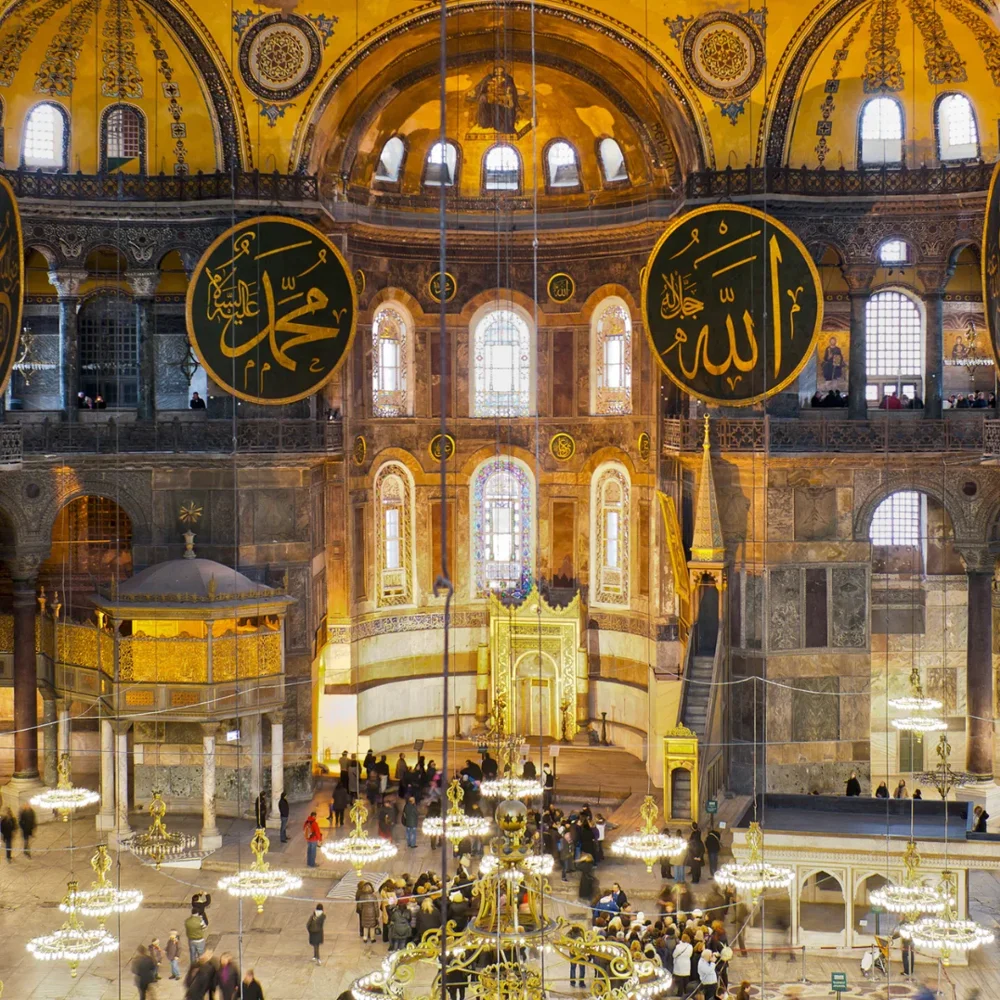
Hagia Sophia is not only a monument; it is a living record of Istanbul’s layered identity. Its vast dome, shimmering Byzantine mosaics, Ottoman calligraphy, marble columns, and prayer-space arrangement tell a story that spans the Eastern Roman Empire, the Ottoman Empire, the Turkish Republic, and modern Istanbul.
Unlike many historic sites that belong clearly to one period, Hagia Sophia asks visitors to look at continuity and transformation together. That is why it remains essential for anyone interested in architecture, religious history, Byzantine art, Ottoman heritage, or the cultural crossroads between Europe and Asia.
A Time Machine Built of Stone and Mosaic
The history of Hagia Sophia is a complex narrative of creation, destruction, and rebirth, matched only by the intricately embellished walls of its interior. This extraordinary building has witnessed the rise and fall of empires, survived devastating fires, and stood at the crossroads of major world religions.
The Earliest Foundations
The very first church on the site of today’s Hagia Sophia was commissioned by Emperor Constantius II in 360 AD. Known initially as the "Great Church," this early structure was celebrated for its grandeur. Unfortunately, the local population's political unrest and riots (most notably the Nika Riots) resulted in fires that destroyed the original church and its immediate successor.
Emperor Justinian’s Vision and Architectural Innovations
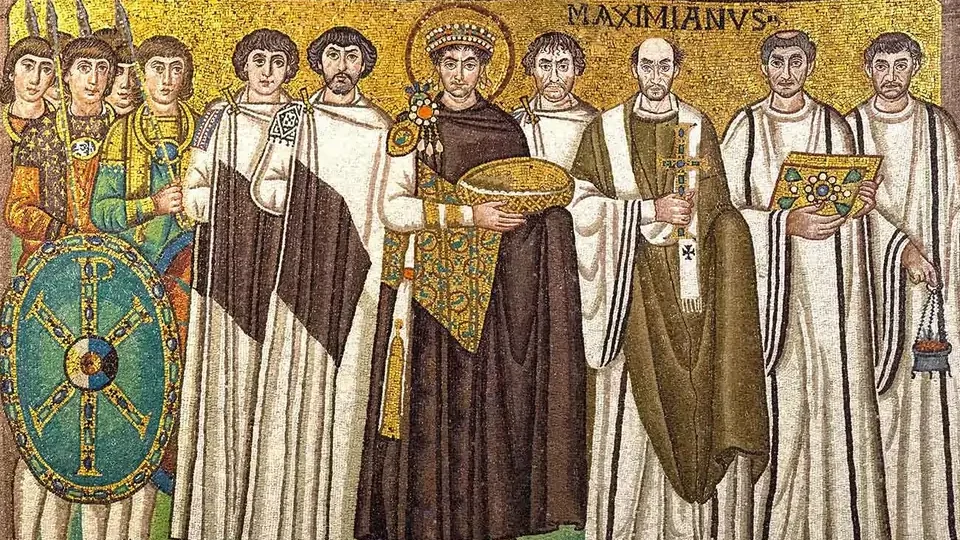
When we think of Hagia Sophia today, we are looking at the vision of Emperor Justinian I. Following the destruction of the second church, Justinian commissioned a structure designed to eclipse every other building ever built and to project the absolute strength of the Byzantine Empire. Commissioned in 532 AD and completed in a remarkably short five years by 537 AD, this third iteration was a marvel of its era.
Justinian employed two master builders, Anthemius of Tralles and Isidore of Miletus, who utilized groundbreaking architectural techniques. Their most significant innovation was the use of pendentives—curved triangular vaults that allowed a massive circular dome to be placed over a square base. For almost a millennium, this breathtaking 55-meter-high dome was the largest in the world, designed to represent the heavens and evoke a deep sense of the sacred.

Transformation Over the Centuries: Church, Mosque, and Museum
When Constantinople was conquered by the Ottoman Empire in 1453, Sultan Mehmet II converted the great cathedral into his imperial mosque. Rather than destroying its foundational beauty, the Ottomans adapted the space, adding towering minarets to the exterior, and an elegant mihrab and minbar to the interior.
Following the establishment of the modern Turkish Republic, founding president Mustafa Kemal Atatürk transformed Hagia Sophia into a museum in 1935, opening its ancient doors to people of all nations and faiths. As a celebrated UNESCO World Heritage Site, it quickly became one of the most visited monuments in Turkey.
Hagia Sophia Today: A Sacred and Historic Space
In July 2020, Hagia Sophia was reconverted into a mosque. So, is it a church or a mosque today? The truth is, it encapsulates a dual identity. Its current status does not erase its Byzantine past; rather, it sits side-by-side with it. Inside, visitors can witness a fascinating mixture of Christian mosaics and Islamic calligraphy—a perfect illustration of Istanbul itself, embodying the blend of European and Asian cultures.
To preserve its multi-religious heritage, the famous historical Christian mosaics are meticulously protected. Curtains are used to temporarily cover certain mosaics only during Muslim prayer times, ensuring art enthusiasts can still admire them outside of religious services.

Essential Access Rules and Entry Fees
To better manage crowds and separate touristic visits from religious practices, the Ministry of Culture and Tourism implemented updated entry rules starting in January 2024. These protocols ensure a peaceful environment for worshippers while maintaining full access for international travelers.
How To Get Upper Gallery Tickets and Where to Enter Hagia Sophia
Foreign tourists are now required to pay an entry fee of 27.5 Euros to access the upper gallery, which functions as a museum space. This gallery offers up-close views of the stunning Byzantine mosaics, the marble gallery, the vast nave below, and the famous dome from an elevated perspective.
The entrance for international visitors is located via a dedicated ramp opposite the Ahmed Fountain, near the Imperial Gate of Topkapi Palace. This route takes visitors directly toward the gallery level and keeps touristic movement separate from the main worship area.
Special Access for Worship
Turkish citizens are permitted to enter the main lower section of the mosque for worship free of charge. Additionally, during designated prayer times, Muslim foreign visitors may enter the main prayer hall through the primary gates on Hagia Sophia Square to participate in religious services.

Practical Tips for Your Visit
When you visit Hagia Sophia, remember that you are stepping into an active place of worship as well as a historical monument. Here are practical tips to ensure a smooth and respectful experience.
Best Time to Visit Hagia Sophia
For the smoothest experience, visit early in the morning on a weekday or later in the afternoon after the heaviest group traffic has passed. Mid-morning can be busy, especially in spring, summer, and on cruise-ship days.
Friday is the most sensitive day because the mosque closes to touristic visits around the main congregational prayer period. On Fridays, the tourist gallery is closed from 12:30 PM to 02:30 PM for congregational prayers. Daily prayer times also shift throughout the year, so checking the schedule before arrival helps prevent disappointment.
How Long Should You Spend Inside?
Most independent visitors spend 60 to 90 minutes exploring the upper gallery, observing the mosaics, photographing the dome, and reading the key historical details. With a licensed guide, allow around two hours for a richer explanation of the architecture, theology, imperial symbolism, and restoration history.
Dress Code and Etiquette
Hagia Sophia is an active mosque, so modest clothing is mandatory. All visitors should cover their shoulders and knees. Women must also cover their hair with a scarf before entering the mosque area. Bringing your own scarf is the easiest option, although coverings are usually available near the entrance for visitors who need them.
Shoes may need to be removed in designated areas, and visitors should avoid blocking worshippers, speaking loudly, using flash, or photographing people during prayer. For broader cultural guidance, review this practical guide on how to visit mosques in Istanbul and Turkey.
Photography and Cultural Savvy
Photography is warmly welcomed, though flash and tripods are prohibited. The best interior photos usually come from the upper gallery, where you can capture the scale of the nave, dome, calligraphy, and mosaics without disturbing worshippers below.
A little cultural savvy goes a long way; familiarizing yourself with simple greetings like saying "Merhaba" (Hello) will often be met with warm smiles and helpfulness from the locals.
What to Visit Near Hagia Sophia
Hagia Sophia sits in one of the densest historic areas in the world, so it is easy to combine several major landmarks in one carefully planned day.
- Blue Mosque: Located across the square, this active mosque is famous for its six minarets, İznik tiles, and elegant Ottoman design. Plan your visit with this guide to how to visit the Blue Mosque.
- Topkapi Palace: The former Ottoman imperial residence is only a short walk away and pairs naturally with Hagia Sophia for a full historical itinerary.
- Basilica Cistern: This atmospheric underground reservoir adds a completely different layer to the Byzantine story of Constantinople.
- Sultanahmet Square: The old Hippodrome area connects Roman, Byzantine, and Ottoman monuments in one walkable route.

What to See Inside Hagia Sophia
Hagia Sophia rewards slow looking. Its visual power comes not from one single feature, but from the way marble, light, gold mosaic, Islamic calligraphy, imperial scale, and architectural daring work together.
The Central Dome
The main dome rises more than 55 meters above the floor and remains one of the defining achievements of late antique architecture. Look for the way the windows around the base create the illusion that the dome is floating above the central space.
Byzantine Mosaics
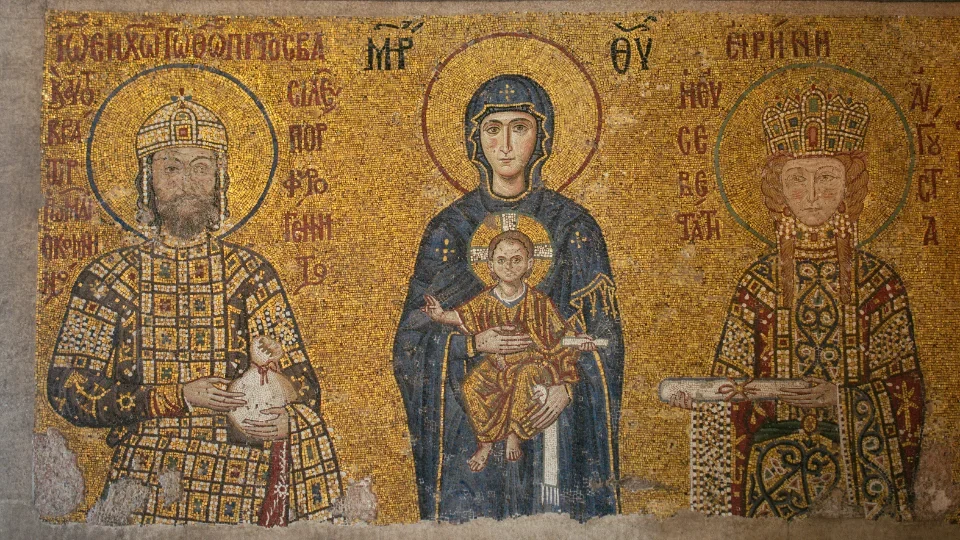
The upper gallery is the most important area for seeing Hagia Sophia’s surviving Byzantine mosaics. Depending on restoration schedules and visitor flow, you may see works such as imperial portraits, the Deesis mosaic, and other sacred scenes that reveal the building’s Christian artistic heritage.
Ottoman Calligraphy and Mosque Additions
The enormous calligraphic roundels, mihrab, minbar, sultan’s lodge, and minarets reflect Hagia Sophia’s Ottoman chapter. These features are not secondary decorations; they are essential evidence of how the building was adapted and protected after 1453.
🎒 Make the Most of Your Experience with a Local Expert
Each section of Hagia Sophia reveals something unique. Navigate the recent entry changes effortlessly and uncover the hidden secrets of its artistic mosaics and cultural transformations with a meticulously planned private tour.
Contact us today to arrange:
- Priority Insights: Seamless guidance through the new visitor routes and upper gallery access.
- Expert Storytelling: Learn the fascinating history behind the architects, mosaics, and empires from licensed guides.
- Custom Itineraries: Enhance your day by combining your visit with a Best of Istanbul Tour.
Frequently Asked Questions
Is Hagia Sophia free to enter in 2026?
Foreign visitors currently need to pay an entrance fee of 27.5 Euros to access the upper gallery museum area. Turkish citizens visiting the lower ground floor for worship purposes can enter free of charge.
Can females wear pants inside Hagia Sophia?
Yes, females can wear pants as long as they are loose-fitting and completely cover the knees. Additionally, shoulders must be covered, and a headscarf is mandatory for all female visitors.
Are the Christian mosaics still visible?
Yes, the magnificent historical mosaics located in the upper gallery are preserved and entirely visible to tourists. In the main prayer hall below, figures facing the direction of Mecca are temporarily covered with curtains only during Muslim prayer times.
How much time do you need to visit Hagia Sophia?
Most travelers spend between 1 to 1.5 hours exploring the upper gallery, taking photographs, and admiring the breathtaking central dome and architectural details. Allow around two hours if you are visiting with a licensed guide or combining Hagia Sophia with nearby Sultanahmet landmarks.